

- Home
- What's new
- Wigan Pier is known around the world, so why aren’t we making more of it?
Wigan Pier is known around the world, so why aren’t we making more of it?


Just over a year ago, Wigan Council chose Wigan Pier to launch its second five-year cultural strategy. The strategy covers culture right across the borough, not just the Pier, but 12 months on I thought I’d have a look at what’s actually changed there.
There has been some progress. Curious Minds, a ntional charity which encourages children to get involved in the arts, announced months ago that it is moving into the building next to what used to be The Orwell, and work is now underway to get the building ready. There have also been exhibitions and gigs in the building which used to house The Way We Were museum, although the building still doesn’t have basics including toilets and electricity.
But I’m going to be honest, this part of Wigan upsets me. I spend a lot of my time telling positive stories about Wigan because there are plenty, but I also think we have to be honest about the things which aren’t so positive. The building which used to be The Orwell remains empty and its clock is still missing, the little replica Wigan Pier itself was surrounded by weeds until a member of the public went down and cleared them, and the statue of the bloke nearby is still missing part of his head.
I’ve actually been asking why Wigan doesn’t make more of this area for a long time. On January 6, 2014, when I was working at Capital FM, I went down to the old Wigan Pier nightclub for one last look around as it was being demolished.

I asked David Molyneux, who was deputy leader of Wigan Council at the time, what was going to happen to the area afterwards, and he told me it was going to be called the “Pier Quarter”. I remember saying: “It’s not Manchester, where are the other three quarters?”
He told me Wigan “couldn’t keep living in the past” and had to move on. And I did understand what he meant, but I disagreed with him about this then and I still do now. Looking after and making something of your history isn’t the same as living in it. I remember pointing out that Wigan had one of the most famous piers in the world, so why wouldn’t we make more of it?
His comments about Orwell weren’t new either. In a 2011 interview with The Guardian, Molyneux said: “It’s took us a long time to get over his books. I can’t say he did us any favours; the flat-cap-and-whippet syndrome stuck around longer.”
Twelve years later, where the nightclub once stood, there’s some grass, gravel, wooden planks with a poem about Wigan Pier on them, and not much else.

For me, Wigan Pier is probably the biggest symbol of Wigan we’ve got. It represents our industrial heritage and the incredibly hard work generations of people did here, but it also represents something else about Wigan: our sense of humour and our ability to take the mickey out of ourselves.
The Wigan Pier people know today isn’t the original. The original was a coal-loading structure on the canal, where coal was transferred into barges. The replica which stands there now is in a different place to where the original was, and was built by students from Wigan and Leigh College in 1986.
Even the origins of the name aren’t completely settled. There are several stories about how the joke began. One account links it to a wooden structure associated with the railway and coal industry, while another says it came from a joke from passengers on a train. George Orwell himself later wrote that there had been a “tumble-down wooden jetty” beside one of Wigan’s canals which had been given the name Wigan Pier as a joke.
What we do know is that the joke was already around before Orwell arrived and was helped along by music-hall comedians, including George Formby Senior.
When Orwell came to Wigan in 1936, he actually went looking for Wigan Pier and couldn’t find it. The original had already disappeared (it was sold for scrap in 1929, for £34), but the joke had very much survived.
The book was published on 8 March 1937, and next year marks its 90th anniversary. There are still signs for Wigan Pier on the motorway, and people who have never been anywhere near Wigan know the name because of Orwell.

But Wigan has always had a slightly complicated relationship with Orwell, and there is still a perception that he came here, looked down his nose at the town and slagged Wigan off.
He didn’t.
Or at least, that’s not how I read the book.
Orwell himself wrote that he “liked Wigan very much – the people, not the scenery”, and if you read the way he writes about the miners, it’s clear how much respect he had for the people he met here.
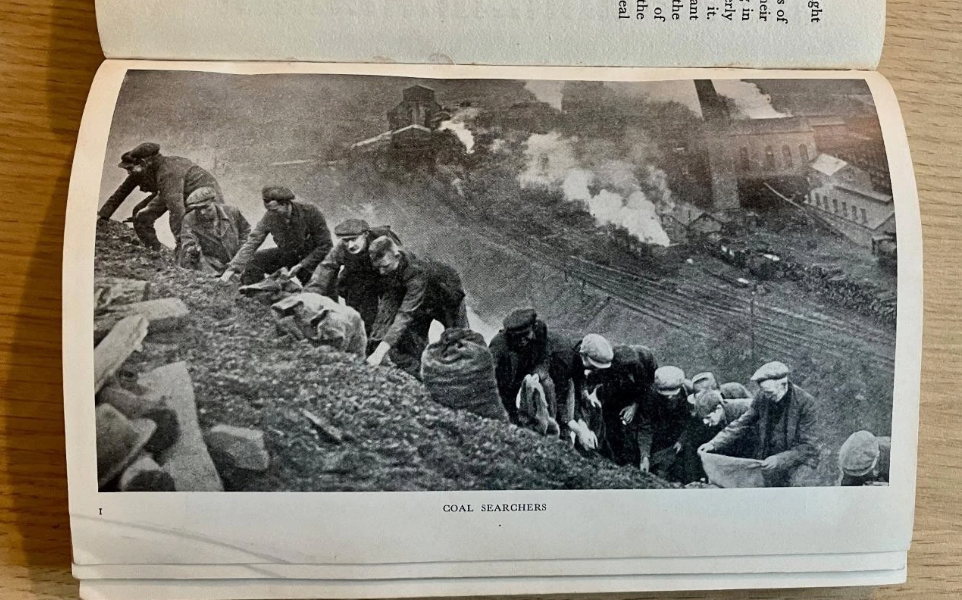
He describes the miners working underground as looking like “iron-hammered iron statues” beneath the coal dust, writes about their “most noble bodies” and says that when you saw them working underground in just their clogs and kneepads, you realised what “splendid men” they were.
He was writing about poverty and terrible living and working conditions, but he was also exposing the huge divide between North and South and the people whose hard work was helping to power lives elsewhere. That’s an important part of what The Road to Wigan Pier is about, and I think it can get lost when people remember only the descriptions of poverty.
There’s a lovely bit of local history too. Jim Hammond, the miners agent for Wigan at the time, said Orwell’s description of the miners working underground was the best he had ever read.
And that’s why I think the Orwell connection matters. Wigan already had the joke. Orwell didn’t invent Wigan Pier, but he took that very Wigan joke and made it famous around the world.
And that brings me back to the council.
I’ve been asking about George Orwell and his significance to Wigan for years, but with the 90th anniversary of The Road to Wigan Pier coming up next year, I wanted to know whether the council has anything planned to mark it. The answer, at the moment, is that there is nothing concrete I can report.
A Wigan Council spokesperson told me: “Wigan Pier is an important symbol of our borough’s industrial heritage, with a story that is recognised far beyond the area.
“George Orwell and The Road to Wigan Pier play a big part of this legacy and give the Pier a cultural significance that continues to resonate nearly a century later. Through this cultural strategy and particularly the theme of ‘new heritage’, we will be exploring with communities how our story and heritage sits in society today, and Orwell and the Pier will of course be part of that conversation.”
The council was also keen to point out that the cultural strategy is much wider than Wigan Pier and George Orwell, saying it was created in partnership with the community and culture sector and aims to support cultural activity and education across Wigan, tell local stories and develop pathways for local people to work in the creative sector.
I know that. I wasn’t suggesting Wigan is all about George Orwell, and I certainly don’t think it should be. There are hundreds of stories to tell about this town and its people. But the council chose Wigan Pier as the place to launch this strategy, and next year brings a pretty significant anniversary for one of the things which has made that name known around the world.
So I asked the obvious follow-up questions. When the council says Orwell and the Pier will be “part of that conversation”, what does that actually mean? Does the council think the Orwell connection is important for Wigan? Are there any actual plans to do anything with it? And, specifically, is anything being planned to mark the 90th anniversary of The Road to Wigan Pier?
The response was: “We don’t have anything to add at this point regarding the cultural strategy and links to George Orwell. As the team deliver more of the cultural strategy 2025-30, there may be further updates in the future.”

And that’s what has left me baffled. This isn’t me writing a hit piece about the council. I’m just someone from Wigan who can’t understand why we’re not making more of one of the most famous things we’ve got.
I remember when the Queen came to Wigan in 1986 to officially open the whole complex. The pub was called The Orwell then, and the connection to George Orwell was right there in the middle of Wigan Pier. Now the building is empty, its clock is missing, and there is nothing there which mentions George Orwell at all.
I know the council is right when it says Wigan isn’t just about George Orwell. Of course it isn’t. We’ve got hundreds of stories, people and places which make up our history and culture. But that doesn’t mean we have to choose between celebrating those things and making something of Orwell.
I just think it would be a shame to let the 90th anniversary of the publication of The Road to Wigan Pier pass without doing something with that.
It doesn’t have to be a huge Orwell festival or turn Wigan Pier into some sort of Orwell theme park. But surely there is a way of telling the story properly, celebrating the miners and the industrial history, explaining the joke behind Wigan Pier and looking at the book and the man who made that name known around the world.
It’s our industrial heritage, it’s the people who did incredibly hard work here, it’s a brilliant bit of local history and it’s also a bloody good example of our sense of humour.
I’d just love to see us make more of it.
And while we’re at it, it would be good to get the bloke with half his head missing sorted out too.

If you’ve got a story to share, please get in touch, click on the red button, it’ll give you all the info I need.





Have a story to tell?
Got a story you’d like to share? I’d love to hear from you. Click the button below to find out what information I need.